Concrete steps construction in Springfield IL - a solid, even climb to your door
Cracked, sinking or uneven steps at your door get rebuilt on firm support, with every rise laid out before the forms go up.
Request an estimate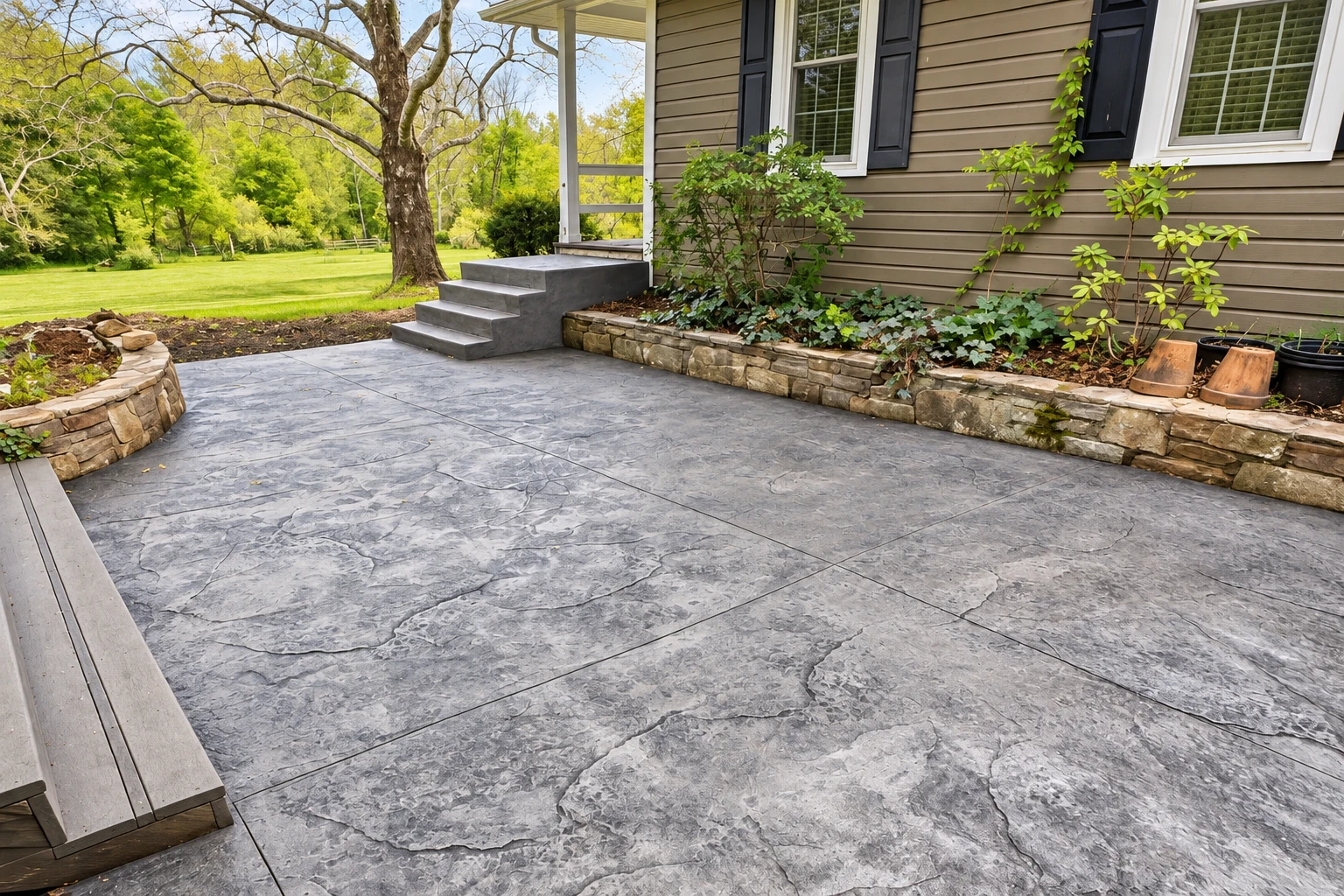
What does it take to rebuild concrete steps that last?
Concrete steps construction in Springfield means taking out worn, cracked or sinking steps and building new concrete ones on firm support, so the climb to your door is solid, even and safe to use in every season.
Most calls start with steps that have cracked, tipped toward the house or dropped away from the door, leaving a gap at the threshold where water collects. The price moves with how many steps you need, whether they're precast or poured, the size of the landing and how much old concrete has to come out. The schedule turns mostly on the weather, the cure time and any permit your address calls for. If the budget is tight, I'd rather trim the finish than the ground work, because a surface can be redone later but the support is buried under the concrete for good. If a cracked walk meets the bottom step, we can plan a new concrete sidewalk in the same job, and your estimate shows what you're paying for before we start.
How we build concrete steps
We start by breaking out the old steps and hauling them away, then dig down to see what we're building on. Steps are only as solid as what's under them, so we settle the support before anything else, packing the subgrade the steps will sit on and setting whatever footing the job calls for. Then we lay out the whole rise from the walk to the door before the forms go up, because a small error repeated on each step adds up fast. We tie in rebar, steel bars that hold the concrete together if it tries to crack, then pour and shape the treads with a slight pitch so rain runs off instead of sitting. A broom finish goes on top, a light texture that gives your feet some grip on wet or icy mornings, and last comes curing, the wait while the concrete gains its strength before anyone walks on it.
Steps often meet other concrete work. On a new house the steps tie into the walls we pour during foundation installation, so planning the two together keeps the landing at the right height for the door. A stoop, porch or small addition may sit on a slab, and that's the same careful ground work we do in slab foundation building.
What changes for concrete steps in Springfield
Steps that run out to a public sidewalk or reach toward the street need extra planning here, because the city's Office of Public Works issues a separate Excavation Permit that has to be in hand before any work starts in the public right-of-way, the strip of city land along the street. Springfield's code list also includes the International Residential Code, and adopted codes like that one can govern riser height, tread depth, landings and handrails, which is one more reason we lay out the full rise first. We check what the city or village office asks for at your address and take care of the permit paperwork for our work when a permit applies, and if the office needs something from you as the owner, we'll tell you early.
The ground deserves attention too. Where a building permit applies, the city's application makes the applicant and the owner responsible for looking into soil compaction and mine subsidence, the ground settling over old mine workings, and it names the Illinois Department of Natural Resources for more information. On older homes here, and on jobs in Chatham and Decatur, we often find steps that were set on loose fill and slowly pulled away from the house, so we dig and check before we form.
Concrete steps and entries
Get an on-site estimate for your new steps
We reply to every message within one business day, and I'll set a time to come out, look at your steps and write the estimate, which is free and carries no obligation. It helps if you note how many steps you have, whether you're leaning toward precast or poured, and whether the steps meet a public sidewalk.
(217) 210-0810Common questions about concrete steps in Springfield
How much do concrete steps cost in Springfield, IL?
Across the US, installing concrete steps usually costs about $100 to $500 per step, and that's the general market figure, not our price. Where your job lands depends on precast or poured, the landing and how much old concrete has to come out. I'll put your own figure in writing at the on-site estimate.
Should I pick precast or poured concrete steps?
Precast steps cost less because they're hollow and quicker to assemble, while poured steps cost more but can be built to a much wider range of sizes. If a standard size fits your door and walk, precast is the lower-cost choice. If your entry is an unusual height or needs a bigger landing, poured is usually worth the extra, and I'll tell you which I'd choose for your entry at the estimate.
How long do concrete steps last?
Concrete steps usually last 30 to 40 years with proper care and upkeep. That range assumes the care, so plan on looking after them once we're done, keeping water from sitting on the treads and dealing with small problems early.
Can concrete steps be poured in cold weather in Springfield?
Yes, but only with protection, because fresh concrete freezes below about 25°F and concrete that freezes can lose more than half its potential strength and won't be durable. Industry guidance is to keep a cold-weather pour from freezing until about two days after it's placed, so we plan winter pours around the forecast and the protection the steps will need. You can also ask whether the mix quoted for your steps is air-entrained, made with tiny air bubbles that help it handle moisture and repeated freezing and thawing.
How do I protect new concrete steps from salt damage the first winter?
Let new steps air-dry for a while before they meet deicing salt, which research on salt damage lists as one way to help concrete resist scaling, the flaking of the top surface. The same research points to less water in the mix, enough air in it, and proper finishing and curing, so those are fair things to ask any contractor about.
What causes concrete steps to sink or pull away from the house?
Most of the time it's the support underneath, not the concrete itself. Steps either rest on the ground, connect to a landing or foundation, or span like a stair, and even small decorative steps need more than loose, unpacked fill below them. How they're supported decides the reinforcement and footing work they need, so when we rebuild a sunken set, I find what let the old ones drop before anything new goes in.
Book an estimate for steps in Springfield
We take calls seven days a week until 10 PM, so you can reach us after work at (217) 210-0810 or send the form whenever it suits you.